


Newborn vs. Lifestyle Photography: Which Style Is Right for Your Family?
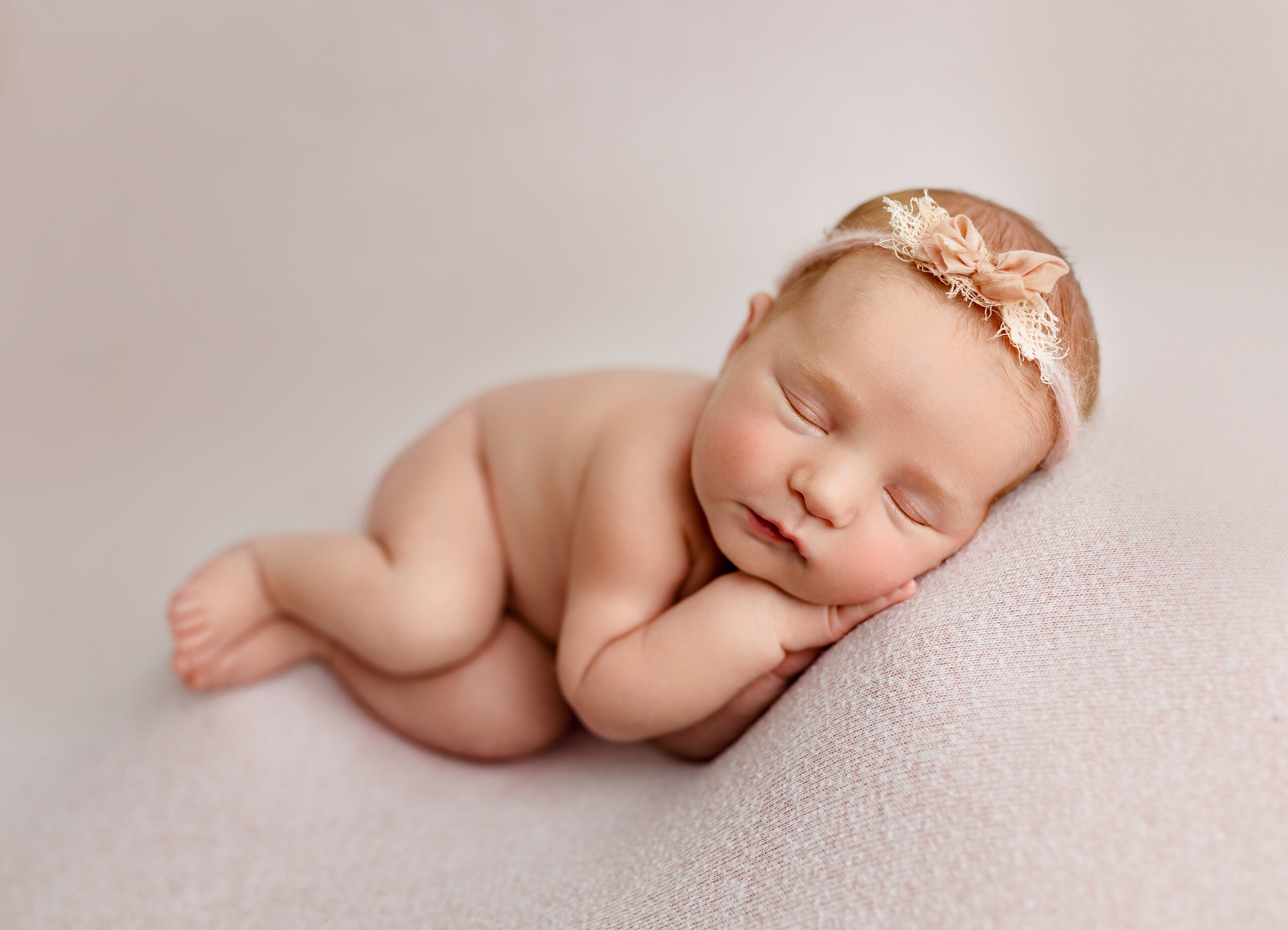
When you start researching newborn photography, you are going to run into two terms pretty quickly: posed newborn photography and lifestyle newborn photography. Both produce beautiful images. Both capture your baby during those incredible first days. But the experience, the look, and the final gallery feel very different depending on which style you choose.
I photograph both, and I love both for completely different reasons. But instead of telling you which one is better (spoiler: neither is objectively better), I want to walk you through exactly what each style involves so you can choose the one that feels right for your family.
What Is Posed Newborn Photography?
Posed newborn photography is what most people picture when they think of professional newborn portraits. These are the carefully composed images of a sleeping baby curled into a wrap, nestled in a basket, resting on a soft blanket with their tiny chin on their hands. The session takes place in a studio (or a dedicated setup) with professional lighting, wraps, props, and backdrops.
The photographer gently guides the baby into specific positions throughout the session, always with safety as the top priority. Some of the most iconic poses you see online, like the froggy pose or the potato sack pose, are actually composite images: two or more photos merged together in editing to create the final look while a parent or assistant supports the baby at all times during the actual shoot.
Posed sessions are typically best within that 5 to 14 day window after birth, when babies are sleepiest and most naturally flexible. They tend to run two to three hours to allow for feeding, soothing, and working at the baby’s pace.
The result is a gallery of polished, timeless portraits that focus entirely on your newborn. These are the images that look stunning as large wall art, in a custom album, or as heirloom prints for grandparents.
What Is Lifestyle Newborn Photography?
Lifestyle newborn photography takes a completely different approach. Instead of a studio with props and poses, lifestyle sessions are typically shot in your home, using natural light and real moments. The focus is on connection: you holding your baby, your partner’s hand on your newborn’s back, a sibling peeking into the bassinet for the first time.
There is very little posing involved. I might suggest where to stand or how to position yourselves near a window for the best light, but the goal is to capture your family as you actually are in this season of life. The rumpled bed, the nursery you spent months preparing, the coffee cup on the nightstand, your dog curled up at the foot of the bed while you rock the baby. These details tell the story of your family in a way that a studio backdrop cannot.
Lifestyle sessions tend to be shorter, usually about an hour to an hour and a half. They are less dependent on the baby being asleep, which means they work well even after that two-week window has passed.
The result is a gallery that feels warm, documentary, and personal. These images capture the feeling of this time in your life, not just the way your baby looked.
How to Decide Which Style Fits You
There is no wrong answer here, but there are a few questions that can help you figure out which direction to lean.
If you are drawn to images that feel artistic and timeless, with the baby as the star of the show, posed is likely your style. If you care more about capturing the emotion and the environment of early parenthood, with your whole family in the frame, lifestyle might be the better fit.
Think about where you want to display these photos. If your vision is a large canvas above the mantle featuring a beautifully lit portrait of your sleeping newborn, a posed session will deliver that. If you imagine a wall of framed moments showing your family in the early chaos and beauty of life with a new baby, lifestyle gives you that narrative.
Your comfort level matters, too. Some parents feel self-conscious in front of the camera and prefer the session to be focused on the baby. Others want to be in the photos because they know these early days go fast and they want to remember what it felt like to hold their newborn for the first time. Both instincts are valid.
Why Not Both?
Here is something I suggest to a lot of my families: you do not have to choose just one. Many of my sessions blend both styles. We start with some beautifully posed portraits of the newborn, and then we transition into more relaxed, lifestyle-style family moments. You get the best of both worlds, a gallery that includes wall-worthy fine art portraits alongside intimate, candid family images.
This blended approach is especially popular with families who have older children. The posed portion captures the newborn on their own, while the lifestyle portion lets siblings interact naturally with the baby, resulting in some of the most genuine and joyful images of the entire session.
A Quick Comparison
Posed sessions happen in a studio setting. They focus on the newborn with artistic, composed images. The ideal timing is 5 to 14 days. Sessions run two to three hours. The feel is polished and timeless.
Lifestyle sessions happen in your home. They focus on your whole family with candid, documentary-style moments. They are more flexible on timing and usually last about an hour to an hour and a half. The feel is warm, personal, and story-driven.
Let’s Find Your Style
If you are still not sure which direction to go, that is completely okay. I am always happy to talk through your vision, your family dynamic, and what you are hoping to get out of the session. We will figure it out together.
Jules Creative Photography serves families across Manalapan, Monmouth County, and the surrounding areas of central New Jersey.
Reach out today and let’s design a newborn session that feels perfectly you.
-Jules


