


The Ultimate Guide to Newborn Photography Props and Safety
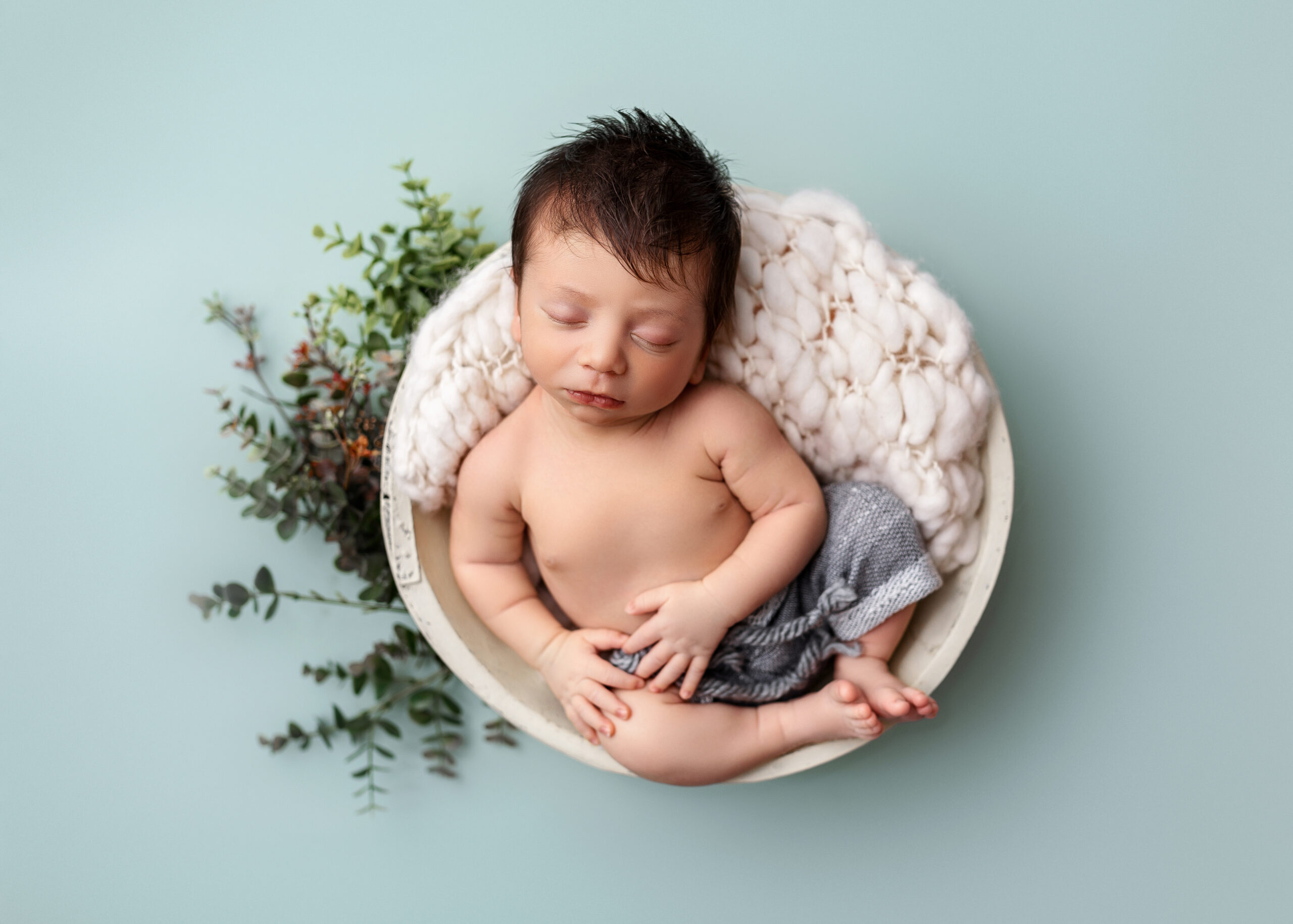
When you see those beautiful images of newborns curled up in baskets, draped in delicate wraps, or tucked into tiny knit outfits, it is natural to wonder: how is that done? And more importantly, is it safe?
These are exactly the right questions to ask. As a newborn photographer in Manalapan, safety is the foundation of everything I do. Before a single photo is taken, before I even think about lighting or composition, my first priority is your baby’s comfort and security. I want to walk you through exactly what goes into the prop and posing side of a newborn session so you can feel completely confident when you walk through my door.
The Props You See in Newborn Portraits
Professional newborn photographers use a variety of props to create those dreamy, artistic images. Some of the most common include wraps made from soft, stretchy fabrics that gently swaddle the baby. Baskets and bowls that are lined with thick padding and blankets to create a cozy nest. Knit bonnets, headbands, and tiny outfits designed specifically for newborns. Fur and textured blankets that add warmth and depth to the images. And simple wooden crates or beds that serve as a neutral, beautiful base for the portrait.
Every prop I use has been carefully selected and tested. Nothing goes into a session that has not been washed, sanitized, and inspected for any rough edges, loose pieces, or instability. Fabrics are washed with hypoallergenic, baby-safe detergent between every single session. If a basket or container is involved, it is weighted, padded, and placed directly on a stable surface close to the ground.
The Truth About Those Iconic Poses
This is something most parents do not realize, and it is one of the most important things I can share with you: many of the most dramatic newborn poses you see online are not single images. They are composites.
A composite is a final image created by blending two or more photos together in editing. The reason this matters is safety. Take the froggy pose, where a baby appears to be sitting up with their chin resting on their hands. In reality, that image is created from two separate shots. In one, a parent’s hands support the baby’s head. In the other, hands support the wrists. The two images are merged in editing, and the hands are removed to create the final portrait.
The same technique is used for the potato sack pose, where a baby looks like they are standing upright wrapped in fabric, and for any image where a baby appears to be suspended, hanging, or balancing without support. In every case, there are always hands on the baby. Always. The magic happens in post-production, not by putting your baby at risk.
Any photographer who tells you otherwise, or who creates these poses without composite techniques, is not following industry safety standards. Period.
How I Keep Your Baby Safe During Every Session
Safety in newborn photography is not just about avoiding obviously dangerous situations. It is a comprehensive approach that covers every detail of the session from start to finish.
The studio is kept between 75 and 80 degrees to help your baby stay warm and sleepy. Newborns cannot regulate their own body temperature, so maintaining a warm environment is essential for both comfort and safety.
Your baby’s head and neck are supported at all times. This is non-negotiable. Newborns do not have the muscle control to hold their own head, and their head is proportionally much heavier than an adult’s. Every transition between poses, every adjustment, every moment of the session involves deliberate, gentle support.
I never force a pose. If your baby is resisting a position, fussing, or showing any signs of discomfort, we move on. There is no image worth making a baby uncomfortable. My sessions are baby-led, meaning your little one sets the pace. Some babies love being curled up tight. Others prefer to stretch out. Some sleep through the entire session. Others need more breaks. All of that is perfectly fine.
A spotter is always within arm’s reach. Whether it is me, my assistant, or one of you as the parent, there is always someone close enough to respond immediately if the baby shifts, startles, or needs attention. You are welcome, and encouraged, to stay close to your baby throughout the entire session.
What to Look for When Choosing a Newborn Photographer
If safety is important to you (and it should be), here are a few things to ask any newborn photographer you are considering.
Ask if they use composite techniques for complex poses. If they say no, or if they do not know what you are talking about, that is a red flag. Ask whether a parent or assistant will be within arm’s reach at all times. Ask about their studio temperature and hygiene practices. Ask how they handle a baby who is fussy or does not want to be posed. A photographer who prioritizes safety will be happy to answer every one of these questions in detail. They will not rush past them.
Beautiful Portraits Should Never Come at a Cost to Your Baby
I became a newborn photographer because I love these tiny humans and the families who are building their lives around them. Every prop I choose, every pose I attempt, and every decision I make during a session is filtered through one question: is this safe for the baby? If the answer is anything other than an absolute yes, we do not do it.
Jules Creative Photography serves families across Manalapan, Monmouth County, and the surrounding areas of central New Jersey.
Book your newborn session today knowing your baby is in experienced, careful, and loving hands.
-Jules


